











CONDENSATION
May 21, 2015 at 9:07 PM
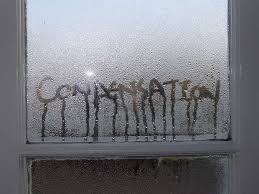
Winter Condensation
Condensation is one of winter’s less pleasant accompaniments. As the days get colder, many homes fall prey to moisture covered windows, damp walls, musty fabric, clothes that never seem to dry properly and the growth of mould. Condensation is an unpleasant consequence of cooler weather, but there are steps you can take to minimise it’s effects on your home.
Condensation Theory
Condensation occurs when warm damp air strikes a cooler surface. Cool air cannot hold as much moisture as warm air, so when warm air cools moisture is forced out of it. This is illustrated most obviously in the home by the rivulets of water running down the inside of windows. Warm air hits the cold glass, cools down, loses some of its moisture, which then collects, or condenses, against the window pane.
Condensation – Where the Water Comes From
Moisture gets into the warm air that fills our homes from a number of sources. One of the ways of reducing condensation is to control the amount of moisture our homes produce. Did you know that through activities like washing, heating, cooking and even breathing, the average person contributes 2kg of water to the interior atmosphere of a house?
What Can You Do?
There are simple steps you can take to limit moisture output:
- Ensure the damp proof course (DPC) around and under your house is intact and has not been damaged or breached. A DPC is essential to prevent ground moisture making its way inside your home.
- Dry your washing outside the house if possible. If you use a clothes dryer, make sure it is vented externally.
- Place lids on your saucepans and keep doors from the kitchen to other parts of the house closed while cooking. Opening your kitchen windows will vent that hot moist air outside and prevent it from worsening your condensation problem inside.
- Similarly, in the bathroom, when showering or bathing, keep windows open and doors closed. When the bathroom is not in use, keep its doors open so that heat from the rest of the house can warm it.
- Wipe up all condensation from windows and sills and wring your cloth out in the sink. In this way you’ll be removing some of that condensation-causing moisture from your home.
- Be aware of how you’re heating your home. An unvented gas heater will pump 200 mls of moisture into the air every hour!
A Breath of Fresh Air – Blowing Condensation Away
It is impossible to eliminate all sources of moisture from your home, but you can get rid of a lot of that moisture-laden air simply by paying attention to your home’s ventilation. Opening windows a little can have a dramatic effect on condensation levels. Creating a cross-current by opening windows on opposite sides of the house is even more effective.
Inside the home, allow for adequate air circulation by leaving a gap of several inches behind any furniture that stands against an external wall. External walls tend to be cool and areas behind couches etc. can become moisture traps if they are not properly aired.
Modern houses are far better sealed than their older counterparts. While this has its advantages there is a downside as far as condensation is concerned. A house that is very good at keeping air and moisture outside is also a house that is very good at trapping warm moist air inside. Good ventilation is essential to counteract this improved sealing and to allow damp air to escape.
Winter Warmth
If there are fewer cool areas for that warm air to come in contact with it will hold onto its moisture, rather than depositing it on your windows, walls and furnishings.
Keeping your home above 18˚C in the cooler months will help prevent condensation. Alternatively, try keeping your home about 7˚C warmer than the outside air.
Simple Tips for a Drier Home
Homes that suffer an acute condensation problem may have to resort to a dehumidifier to remove moisture from the air. But where the problem is not overwhelming, limiting the amount of moisture your home produces, ensuring effective ventilation and heating your home adequately can take you a long way towards a safer, dryer, condensation-free home.